Sunday, June 14, 2015

The Forgotten Street Children Of The World

During Pope Francis' visit at the University of Santo Tomas in Manila early this year, many in the audience (and many more watching on TV) were caught by surprise when a former street child, Glyzelle Palomar, tearfully asked the sharp question nobody expected from her "Why is God allowing such things to happen, even if it is not the fault of the children? And why are there only very few people helping us?" 


Nobody saw it coming. Her words pierced the hearts of the millions who heard it simply because what she said is so true and most of us are in some ways guilty of becoming numb to their plight and in our eyes they cease to exist. Instead of pity, we feel annoyance. Her words are an indictment of society. 

We are aware of the complexity of these kids' life situation. Many of them are victims of physical and even sexual abuse and, at an early age, are exposed to drugs and sexual exploitation. Like those scenes we saw in the Bollywood movie 'Slumdog Millionaire', not a few of these street kids are being manipulated by criminal syndicates to go around the city begging on the streets for them. Growing up distrustful of the adults in their young lives, it's not easy to set up social programs to reach out to them as evidenced by the lack of success by many government agencies and other advocacy groups working with street children. What's more embarrassing are reports that the same agencies handling the street kids even attempted to "hide" these children when foreign dignitaries come to visit their countries as was the case in the Philippines when Pope Francis came to visit in January this year.

I believe success will be a lot easier if public support is strong which is really not the case as pointed out by Glyzelle  with her 'why are there only very few people helping us?.'  We all let these kids down. So what can we do as citizens? I believe public awareness (and acceptance) of their difficult struggle to survive is the first step in helping the homeless children in the streets of Manila, Bangkok, Mumbai, Rio de Janeiro, Durban in South Africa and anywhere else in the world where there are  street children roaming around their cities. With strong public support, more effective social programs by both government and non-governmental organizations will get easily adopted and implemented.


Let's hope that countries will stop ignoring these kids and instead serious and concrete actions will be implemented by governments, church and other civic organizations to uplift them out of their miserable lives. 


Saturday, June 6, 2015

Inventing Diseases To Sell Drugs

Does the pharmaceutical industry manufacture diseases as well as drugs? In some cases, yes they do.

There's a word for that: "disease-mongering." Increasingly, more and more experts and researchers have raised the alarm and warn the medical establishment, government policy makers and the public of this disturbing and dangerous trend that I consider a public health hazard itself. According to BBC, "disease-mongering promotes non-existent diseases and exaggerates mild problems to boost profits."

Researchers at Newcastle University in Australia said drug companies are putting healthy people at risk by "medicalizing" conditions such as menopause (too often treated as a disorder when it's really a normal part of life) or in the case of irritable bowel syndrome, it is being promoted as a serious illness needing therapy when it is usually just a mild problem.

A good example is ADHD (Attention Deficit Hyperactivity Disorder). Many pediatricians bend over backwards to make the diagnosis and start children on dangerous chemical drugs at that tender age. Now comes the bombshell. Before his death, Dr. Leon Eisenberg admitted to Der Spiegel, the German magazine, that ADHD is a fictitious disease which they put together in 1968 for the benefit of drug companies in the new disease classification at that time of the DSM or Diagnostic and Statistical Manual of Mental Diseases, the bible in Psychiatry for decades. Dr. Eisenberg's contribution to mental disease by invention and committee consensus has resulted in drugging millions of children from preschool age through high school who were often prescribed Ritalin. Ritalin was tested by the Brookhaven National Laboratory (BNL) which found that it is pharmacologically similar to cocaine with perhaps even worse brain damaging potential.

Even risks factors such as high cholesterol and high blood pressure are being reclassified as diseases in their own right - hypercholesterolemia and hypertension, respectively - with falling thresholds resulting in more people considered to be sick.

Lynn Payer, author of "Disease-Mongers: How Doctors, Drug Companies, and Insurers Are Making You Feel Sick" wrote "Disease-mongering—trying to convince essentially well people that they are sick, or slightly sick people that they are very ill—is big business." Some critics characterize it as a vicious cycle in which businesses invent new diseases to match their existing drugs.

Take for example shyness. Excessive shyness is now a disorder called "social anxiety disorder" or social phobia. In October 2003 the FDA approved Paxil as treatment for social phobia.' "Shyness is a new disease invented by Glaxo" said Sidney Wolfe, executive director of the Public Citizen's Health Research Group in Washington, DC. Worse, in the US which is one of the few countries that allow direct-to-consumer advertising for medications, the consumers are being bombarded daily with ads which has a major impact on their view of a disease or "disease." The ads for Paxil in the late 1990s suggested that one in eight Americans had social anxiety disorder. "One in eight Americans! This is clearly an absurd fiction. The point of that is to try and make ordinary people feel sick", fumed one concerned expert.

Of course, some of these newly discovered diseases are real. There are two extremes in this issue: those who over-promote the "pill for every ill" philosophy and those overly suspicious critics who view diseases as being invented. The truth is somewhere in between. But if the medical establishment is not careful and vigilant, our doctors will become like our lawmakers in congress who are being controlled by the lobbyists and their corporate sponsors.

Some of these new "diseases" are really quite interesting. Take, for example, "Shift work sleep disorder" or SWSD. According to ICD 10, the medical coding standard often used by healthcare providers, insurers and Medicare, it is a circadian rhythm sleep disorder characterized by insomnia and excessive sleepiness affecting people whose work hours overlap with the typical sleep period. SWSD is yet another "disease" being promoted by Big Pharma for the sole purpose of selling drugs like Nuvigil, sold by Teva Pharmaceuticals. The fictional narrative is that those poor night shift nurses, for example, who suffer from excessive sleepiness are not simply tired because they are out of sync with the sun, the tiredness they feel when they stay up all night is actually a disease requiring medication. Yet one of the most common side effects of Nuvigil, the treatment for SWSD, is, ironically, also insomnia! Nuvigil is also a highly addictive controlled substance. Oh, those poor nurses (including my sister in Maryland) who are doing the graveyard shift! Avoid Nuvigil at all costs if you don't have to.

The latest "disease" to grab the limelight is "Hypoactive Sexual Desire Disorder" or HSDD. Women who are supposed to suffer from this new condition are being treated with flinbanserin from Sprout Pharmaceuticals. It is popularly known as the pink Viagra. Researchers believe sex equality advocates, along with the drug industry, are creating a medical need where one doesn’t really exist.

As earlier mentioned, one of the "dark" business models of Big Pharma is to invent a fake disease, promote the disease to push a new pill, then get as many people to take those pills as possible while Medicaid and Medicare programs write the checks. That's crazy.

But the blame is not purely in the hands of the drug industry. Top experts in their medical specialties who willingly become the spokespersons for these drug companies and even the unwitting doctors who help push the drugs for these new "diseases" are equally guilty. The pharmaceutical companies are very ingenious in the different ways they pump drugs into the medical system. According to James Ridgeway, techniques include "buying medical experts to put their names on articles written by the drug companies which can then be placed in medical journals; or hosting small casual dinners of docs to tell them about supposedly new and proven but still off-label uses for drugs. Docs get asked to come along for wonderful vacations with the dealers."

Dr Adriane Fugh-Berman, a Georgetown University physician, further exposed their methods on her article that appeared in the Boston Review. According to her, not only they "buy" the expert doctors, they also pump knowledge about the creepy new condition into the medical world through Continuing Medical Education, or CME, the process which helps doctors and other healthcare professionals keep abreast of new developments in their field.

Here’s how it works. Drug companies identify opinion leaders - influential healthcare professionals at academic medical centers. Selected opinion leaders are wooed. Opinion leaders whose perspectives "align" with the company’s marketing goals are then courted. A company may nurture relationships with targeted healthcare professionals over many years and will pay them to educate their peers at CME events and other settings. As expected, industry-paid speakers frequently deny espousing marketing messages. But these drug companies don't hire doctors to sell drugs. They hire them to sell diseases.

Very disturbing. On a lighter note, a former classmate in medical school, an ophthalmologist by trade, whom I recently had a quick reunion, amusingly quipped to me that had he known his family wants to travel extensively he would have taken residency training in internal medicine, implying that internists get much more corporate-sponsored travels for free than ophthalmologists. Of course, it's a joke (with some truth in it. LOL). I don't see serious harm on doctors attending pharma-sponsored conferences AS LONG AS they can keep their professional independence and critical thinking. I'm more concerned about the more impressionable younger doctors especially fresh residents who often take these new  "knowledge and discoveries" that appeared in medical journals almost like unassailable truths.


Sunday, May 3, 2015

Monday Morning Quarterbacking Following The Mayweather-Pacquiao Mega-fight

My good friend, Joji Bulawin, is right about Monday morning quarterbacking among Filipinos following any Pacquiao fight the night before. Actually, it should be termed "Sunday morning boxing analysis."
Allow me to join the fray as well. There's no doubt that after last night Floyd Mayweather has proven to the world that he is in fact the best welterweight boxer of all time. His boxing style of incredible defensive skills and speedy footwork takes the air out of even the hardest-punching, most-punishing fighter like Pacman. His counter-punching gave him more points than Pacman even if they had similar number of punches thrown: 148 for Floyd, 81 for Pacman. In his words, he is "a calculated fighter." A smart fighter - and a savvy businessman at that. His perfect record of 48-0 with Pacman being the latest addition needs no further proof.
Of course, I'm proud of Manny Pacquiao. He is the best boxer that comes out of the Philippines and who far exceeded the feat of Gabriel "Flash" Elorde beyond the wildest imagination of the Filipinos. Until Pacman came around, Elorde was considered by many as the best Filipino boxer of all time. Francisco Guilledo aka "Pancho Villa" was the other great Filipino boxer of old. Pacman not only wins the hearts of all Filipinos but the many people around the world as well. His overwhelming popularity in the United States even among the elite, Hollywood or otherwise, is very palpable. He is so likeable that it's so obvious that the majority of the crowd undoubtedly were rooting for Mayweather to lose but they were sorely disappointed last night. Even the usually arrogant Floyd, who is characteristically obnoxious to his opponents, was obviously friendly to Pacman - a sign of respect to the man? Floyd's own words about Pacman: “He's is a hell of a fighter. I take my hat off to him. Now I see why he is one of the guys at the pinnacle of the sport of boxing.”
After him, there may never be another Filipino boxer like Pacman in years to come perhaps even in generations. We're lucky to have witness one great Filipino boxer in our lifetime. Perhaps it is fate that he lost the fight last night. Otherwise, the political opportunists in the Philippines will push for him to run for president and you know the many voters in the Philippines, how they mindlessly sent Erap and, some say, even Pnoy to the highest political position of the land. Silver lining?

Wednesday, April 29, 2015

Why Looting During Riots Happened Mostly In Inner-City Black Communities

For the vast majority of Americans, the typical stereotype of a looter during protest riots is a young black man, occasionally Latino, from a predominantly poor black neighborhood. It doesn't help that this general perception is being reinforced by images from crises as current as the still simmering Baltimore riots as well as those from recent and distant past: the bloody riots in Ferguson, MO last year, the massive 1992 post-Rodney King trial LA riots that left many Korean store owners forced to arm and defend themselves and their businesses from looters, and the 1977 New York City riots following a massive blackout brought memories of those pitch dark, hot and humid summer nights New York residents could never forget as they lived in extreme fear from both rioters and the serial killer Son of Sam terrorizing the city. In all of these, there were widespread looting, vandalism and other serious crimes committed. Billions of dollars in property damages were sustained. While buildings and cars were burning, you can hear the cries of "burn, baby, burn" from the angry mob.
A well-meaning friend pointed out to me that in Asia and in many other places elsewhere, people do engage in violent protests and sometimes resorted to vandalism but they hardly turn to looting of private properties. In truth, this has less to do with the color of their skin (if that's what my friend is implying) but more with the prevalent sense of powerlessness in these poor inner-city neighborhoods. Gang membership is also a significant factor in this maladaptive group mentality. The herd behavior during looting and vandalism among young men somehow give them personal empowerment and a sense of belonging.
The LA riots in 1992 were among the largest in US history and the second deadliest with 53 fatalities. But the worst US riots with massive looting happened in July, 1863 in New York City when many protested the military draft law passed following the emancipation proclamation of Pres. Abraham Lincoln. Most of the rioters were Irish-Americans who attacked black folks, burned their homes and looted stores. The official death toll: 119. How ironic that the wild rioters back then were not young black Americans but blue-collar Irish-Americans. 

Saturday, March 7, 2015

The Myth of A Unified "Moro" Resistance And Its Implication To Peace in Mindanao

There's no doubt that Muslim Mindanao, or "Bangsamoro" as it's popularly called nowadays, needs a better framework than what's currently in place under ARMM to keep lasting peace in Mindanao. But, as rightfully pointed out by Pat Abinales in his "The Moro struggle as myth and as historical reality" article that appeared in the Rappler, the historical narrative that's the basis for the Moro people to desire their own "Bangsamoro" homeland is flawed and, unless that reality is recognized and taken into consideration in any peace plan, will be a major stumbling block to any endeavor to achieve such end in Mindanao. 

Even Thomas McKenna, in his "Muslim rulers and rebels: everyday politics and armed separatism in the southern Philippines" published by University of California Press in 1998, spoke of the myth of a unified "Moro" resistance. The Spaniards wrongly labeled all Muslim natives in Mindanao as "Moros", the word they pejoratively used to describe people of Islamic faith back in their native Spain, as if these natives belong to one ethnic group. In fact, the Tausugs, Maranaos and Maguindanaoans hardly had any widespread interactions among themselves and the resistance they put up against the Spaniards and, later, the Americans were mostly localized and were not seen as defending their "country" against foreign invaders. Their wars with the foreigners were not seen in the context of their Islamic faith but rather from defending their individual sultanates.

The Americans were the first to give these Muslim natives their own sense of "Moro" identity. In late 1930s Moro leaders even expressed to the Americans their desire to stay under the US while their Christian brothers in the north sought independence.
But it was Marcos, who secretly planned to take back militarily Sabah and aggressively interfered in Moro politics, that brought these Moro ethnic groups together to resist the central government. It was Marcos, whose failed Merdeka operation resulted in the disastrous Jabidah massacre of young Moro recruits in the island of Corregidor, that crystallized Moro resistance and started the unified Moro insurgency in Mindanao. In 1969, the MNLF was led by two young idealistic Moros of completely different background: Nur Misuari is a Tausug who was a professor at UP and Hashim Salamat was a Maguindanaoan who completed his Islamic studies in Egypt. The former preferred a more secular Bangsamoro and the latter an Islamic state. The former is strongly supported by Tausugs and, to a lesser extent, the Samals while the latter was popular among the Maguindanaoans and, to a lesser extent, the Maranaos.

This reality makes it difficult to have one encompassing Bangsamoro for all Moro ethnic groups and for any peace plan to truly succeed it should be inclusive of at least both the MNLF and the MILF. Perhaps two separate Moro autonomous regions may be a more practical approach. Whatever approach is chosen, time is of the essence in achieving a lasting peace in Mindanao in view of an external phenomenon sweeping the Islamic regions of the world and would soon become a bigger threat to the country if left unattended: Islamic radicalization as exemplified by ISIS and Al Qaeda. Another issue that complicates matters for Mindanao and that needs to be addressed is the Sabah claim. Misuari's MNLF is now claiming Sabah as part of the Bangsamoro. This could be tactical for Misuari but it definitely brings Malaysia into the equation.

References:

1. "The Moro struggle as myth and as historical reality"  by Patricio Abinales

2. "Muslim rulers and rebels: everyday politics and armed separatism in the southern Philippines" by Thomas McKenna


Monday, February 23, 2015

Moro-moro in Philippine Senate: The Emperor's New Clothes

The biggest moro-moro these days is happening not in Mindanao but in the Philippine senate. Everyone in those hearings, senators and military/civilian officials alike, is pretending he/she didn't see that Pnoy is the biggest culprit in the Mamasapano debacle - the big elephant in the room.

It reminds me of one of my favorite children's stories of all time - "The Emperor's New Clothes" written by Hans Christian Andersen. In the story, the emperor's "new clothes" are supposed to be invisible to those who are unfit for their positions, stupid, or incompetent. So when the Emperor walks before his subjects in his "new clothes", not one dares to say that he didn't see any clothes at all until a child cries out, "But he isn't wearing anything at all", breaking the illusion.

All of them are pretending they didn't see the inconsistencies of the president's statements. They pretended that he did not break the rules even if he consciously violated the chain of command by appointing Purisima, the suspended PNP chief, to run the covert operation and excluded the rightful officials for the op, Espina and Roxas. These two officials were not even invited to the January 9th meeting in Malacanang. Worse, some even pretended that there's no chain of command in the PNP to break. They covered up for the president by saying Pnoy did tell Napenas to coordinate with the AFP. How can Napenas coordinate when the operation approved by Pnoy is supposed to be "time on target"? It's so covert and "timed on target" that they did not inform the AFP and both Espina and Roxas until the operation was already under way. Drilon established the fact with his questions that "time on target" and coordination (with the AFP) are just not compatible.

But I think the biggest illusion is the one the Filipino people hold for five years pretending all this time that Pnoy is a NORMAL, SANE person who became president of the Philippines. I'm one of those who pretended and refused to admit that the son of two of the heroes of our time is so different from his parents. Many times the child who cries "But he isn't wearing anything at all" was just ignored and the illusion kept:
When Pnoy was seen weirdly smiling in the midst of a bungled rescue operation to save those HK tourists in Luneta and then later stubbornly refusing to apologize to the people of HK, we pretended.

When he, once again, refused to apologize to another people - this time the people of Taiwan - for the unjust death of a Taiwanese fisherman in the hands of our trigger-happy coast guards, we pretended.

When he went partying the night away with his palace guards instead of visiting the thousands of victims of the deadly typhoon "Sendong" in CDO and Iligan City, we pretended.

When he coldly scolded a businessman in Leyte who expressed his concerns with "Buhay ka pa naman, di ba?" in the aftermath of supertyphoon "Yolanda" and weirdly insisting to CNN's Anderson Cooper that the number of casualties could not possibly exceed two thousand when it's so obvious it will be much more than that, we pretended.


When the Mamasapano debacle happened and Pnoy continued to manifest weird behavior - like flying back to Malacanang and staying eerily quiet for three full days while the whole country was waiting a word from him to tell them what happened, avoided the arrival honors for the fallen SAF 44 by attending instead a car plant inauguration, even coming late for the necrological service the next day, scolding, once again, the widows who asked pointed questions with “Ano’ng gusto nyo, kunan namin ng fingerprints ang lahat ng MILF?", I sure hope that's the last child's cry that will finally break the illusion because the Filipinos cannot continue to pretend that they are NOT being led by someone who is, at the very least, a narcissist, quite possibly a sociopath. Que horror!

At this juncture in the country's unfolding history, there's nothing Malacanang's spin doctors can say that will cover up the President’s complete "lack of empathy, narcissism, intolerance of criticism, and compulsive lying that are characteristics usually attributed to sociopaths." The emperor is finally revealed as having no clothes and unfit to lead his empire. God bless the Philippines!

Monday, March 24, 2014

Part Two On Romantic Love

In his book "We: Understanding the Psychology of Romantic Love", Robert Johnson distinguishes committed love from romantic love. When we yearn for a forbidden, passionate romance like in “The English Patient” or "The Bridges of Madison County," we are often blinded from the beautiful, committed love that is with us in every day life, the "stirring-the-oatmeal" love.

As Johnson writes: "Stirring oatmeal is a humble act--not exciting or thrilling. But it symbolizes a relatedness that brings love down to earth. It represents a willingness to share ordinary human life, to find meaning in the simple, unromantic tasks: earning a living, living within a budget, putting out the garbage, feeding the baby in the middle of the night."

Committed love awakens the ego to the existence of something outside itself. In its very essence, it is appreciation, a recognition, of another person’s value. Romance is not love directed at another human being; the passion of romance is always directed at the lovers' own projections, expectation and fantasies.

Romantic love can only last so long as a couple are "high" on one another. True love is content to do things that the ego is bored with. It is wiling to work with the other person’s moods and unreasonableness. It is willing to fix breakfast and balance the checkbook. It necessarily includes friendship within a relationship between husband and wife while in a romance it's not necessarily true. In fact, many often say "I don’t want to be friends with my husband (or wife); it would take all the romance out of our marriage."

Couples never really settle into relationship with each other as real human beings until they are out of the romantic love stage, until they love each other instead of "being in love."

So, if you really think deeply about it, the dreaded "I Love You but I’m Not in Love With You!", considered by many (including even some family therapists) in the western world the ten-word sentence most likely to end a marriage, may not necessarily be a bad thing. It could mean a transition to a more mature committed love. Of course, many who did not really transition into the more mature phase just want to get out of the relationship that now runs out of romantic energy. The "I love you" part in the sentence is just a consolation.

I like N. Yee's conclusion on this issue:
"In the end, the basis of a stable relationship is founded on a love that emerges not in spite of but because of the other person’s flaws and weaknesses, because ultimately it is our imperfections that make us human. We can seek out [romantic love] with angels, but we can only find true love among mortals."

To read more on the subject of Romantic Love Versus Committed/True Love, check this blog by Dr Will Meek:

http://willmeekphd.com/item/romantic-vs-committed-love


Reference:

Yee, Nick. Love in 4 Acts: What is Romantic Love?
Johnson, Robert A. We: Understanding the Psychology of Romantic Love. Harper San Francisco. 1983.

Saturday, March 22, 2014

Is Romantic Love True Love?


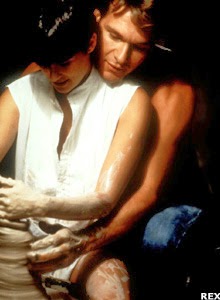
From Fiddler On The Roof
Social media changes the way people interact with their friends and family including their love interests. Young people nowadays commonly express their intimate feelings creatively in cyberspace. You can easily tell when they are "in love" by what they post on their timelines, including pictures.

People have always fallen in love, and throughout the ages many couples have loved each other deeply. But romantic love as the sole or primary basis for marriage is a modern, western invention, beginning to get popular only in the 19th century.

Many people assume that it has been this way for ages and find it odd when some people from places like India still prefer arranged marriage over "love marriage", as the Indians would call it.

In the Broadway musical "Fiddler on the Roof", Tevye was struggling to understand "romantic love" as three of his daughters broke with their Jewish tradition when, one by one, each of them "fall in love" and wanted to marry on that basis. He asked his wife whether they, too, had that experience after 25 years of marriage.

For years, Filipinos, being heavily influenced by western culture early on, had a different experience on this issue compared to some of their Asian neighbors such as the Indians. But, over the years, our Asian neighbors also fell to that fairy-tale "happily ever after" narrative, as they too succumbed to the influence of western literary and other media like movies and songs that bombarded us daily. "Love" marriages are starting to get a foothold in the urban areas of India.

According to Robert Johnson, a Jungian psychoanalyst, we grow up to believe in the irrational assumptions of the fairy tale script of romantic love. He differentiates romantic love from true love – “Romantic love is not love but a complex of attitudes about love – involuntary feelings, ideals, and reactions."

Johnson added: "When we are “in love” we feel completed, as though a missing part of ourselves had been returned to us; we feel uplifted, as though we were suddenly raised above the level of the ordinary world. Life has an intensity, a glory, an ecstasy and transcendence." 
From Titanic

Elaine Hatfield differentiates romantic love and true love this way: passionate love is "a state of intense longing for union with another" and 'companionate' love is "the affection we feel for those with whom our lives are deeply entwined."

Dorothy Tennov noted that true love is an emotion that is acted on while romantic love (she coined a new word “limerence” to describe it) is more of a transformed state that people go into - the difference in the proverbial “I love you, but I’m not in love with you." Some of the symptoms of being "in love" mostly notable among women:

1. Acute longing for reciprocation
2. An aching of the “heart” (a palpable heavy sensation in the front of the chest).
3. Buoyancy (a feeling of “walking on air”)

According to Johnson, the greatest paradox of romantic love is that it never produces human relationships as long as it stays romantic because we are in love with our own fantastical creations instead of the other person for who they really are. Romantic love is a kind of primal religious experience – both revelation and rapture - that is a fundamental part of our collective unconscious. The tragedy of our understanding of romantic love is that it makes us put unreasonable demands on our romantic partners because we believe that they have the responsibility for making our lives whole.

Nick Yee commented on Johnson's observations: "The romantic couples who have been together for half their lives have something quite different from romantic love. Johnson calls it “stirring-the-oatmeal” love – it represents a willingness to share ordinary human life, to find meaning in the simple, unromantic tasks … to find the relatedness, the value, the beauty, in the simple and ordinary things, not to eternally demand a cosmic drama … or an extraordinary intensity in everything.
In a strange way, this is true love because it can be everlasting, but this is not the love script that we are bombarded with from every literary or entertainment form in our lives."

For Tevye and his wife, theirs is not “romantic love” as we know it. They don’t impose the same ideals on their relationships, nor do they impose such impossible demands and expectations on each other.

Yee added: "The tragedy derives from the simple fact that romantic love always fades, and most people do not know how to derive a sincere, human relationship from one that is fantastical and rapturous. And if they learned anything from fairy tales, they learned that a relationship without romantic love is worthless.

All their lives, they have had a vision of what love would be, and they now believe that their 'true love' must then still be out there waiting for them. Many people are stuck forever in this wash-and-rinse cycle of romantic love because they believe that fiery romantic love can be everlasting."

So in "Fiddler On the Roof", the following dialogue is indicative of true love, not just romantic love.
TEVYE "But do you love me?"
GOLDE "Do I love him?"
TEVYE "Well?"
GOLDE "For twenty-five years I've lived with him
Fought with him, starved with him
Twenty-five years my bed is his
If that's not love, what is?"
TEVYE "Then you love me!"
GOLDE "I suppose I do"
TEVYE "And I suppose I love you, too"
It doesn't change a thing. But even so - after twenty-five years, it's nice to know.
Me, too.

Reference:

Yee, Nick. Love in 4 Acts: What is Romantic Love?
Hatfield, E., & Walster, G. W. (1978). A new look at love. Addison-Wesley.
Johnson, Robert A. We: Understanding the Psychology of Romantic Love. Harper San Francisco. 1983.
Lieberman, Marcia K. "'Some Day My Prince Will Come': Female Acculturation through the Fairy Tale." In Don't Bet on the Prince: Contemporary Feminist Fairy Tales in North America and England. Ed. Jack Zipes. New York: Methuen, 1986, pp. 185-200.
Tennov, Dorothy. Love and Limerence. Scarborough House. 1979.


Saturday, February 8, 2014

Non-violent Resistance: What Part Leo Tolstoy And The Pacifist Christians Played

               Almost three years ago, I posted on Facebook about the "Arab Spring"  that swept across the Arab world and on how I admired the non-violent "people power" revolution that toppled the dictatorial regimes in Tunisia and  Egypt. Well, it turned out to be premature because the next country bugged with the democratic reforms fever, Libya, had less than peaceful transition. In fact, it was a bloody conflict that was only cut short with the help of the West. It then spread into Yemen and Syria. The war in Syria turned out to be very ugly and bloody, killing thousands of innocent civilians up to the present. 

               Even the initial success in Egypt turned out to be premature, too. The Muslim Brotherhood appeared to have hijacked the gains of the people power revolution as soon as they were voted into power. They were later overthrown by the military and a lot of uncertainties followed. Despite the setback, there were those who hope that real democracy will finally take roots in the Arab world. They are specially encouraged by what's taking place in Iraq after so many years of total control by Saddam Hussein although big challenges remain. In the West, the hope was that, if President Obama continue to play his card right, the United States will reap the benefit that comes with the spread of democracy across the Arab world with gentle prodding and guidance. 

                    A similar political wind swept the Eastern bloc of communist regimes in Europe over twenty years ago that led to the fall of the infamous Berlin Wall and the Iron Curtain. A decade ago, the Orange Revolution in Ukraine and similar "color" revolutions also brought down unpopular regimes. All these are achieved through non-violent resistance. In 1986, the people power movement in the Philippines ended Marcos' iron rule for over two decades with minimal fatalities. Here in the United States we remember Dr Martin Luther King Jr and the civil rights movement of the sixties. King and other non-violent resistance leaders like him ( Nelson Mandela comes to mind) were influenced by the original non-violent resistance advocate, Mahatma Gandhi of India. Yet few people realize that Gandhi himself was heavily influenced by the philosophy of Leo Tolstoy, the famous Russian author of such classic novels as War and Peace and Anna Karenina. In fact, the two were in constant communication up until Tolstoy's death.

              In 1894, he published a book titled "The Kingdom of God Is Within You", the culmination of Tolstoy's years of Christian thinking.  In it he argued that the mainstream Christian churches were the ones who deviated from Jesus' teachings and are the real heretics. When Jesus says to turn the other cheek, Tolstoy asserted that he simply means that and rejected the interpretations of church scholars who attempted to limit its scope, writing: “How can you kill people, when it is written in God’s commandment: ‘Thou shalt not murder’?” His interpretation of the sacred books may be controversial but it is interesting to note that the origin of non-violent resistance has a religious undertone, Christian in fact. Tolstoy "advocated non-violence as a solution to nationalist woes and as a means for seeing the hypocrisy of the church." In this respect, the Quakers, the Mennonites, the Amish and other pacifist Christian churches are way ahead of most mainstream Christian churches including the Roman Catholic Church. Add to it their plain dress code, simple living and emphasis on humility and equality, these groups seem to understand better the teachings of Jesus. They were also among the first to oppose slavery and giving women equal part in ministry as men.

            The next time you pick up a copy of War and Peace, it is worth remembering that the guy who wrote it was the same guy who influenced Gandhi, MLK, Mandela and others like them who, instead of waging a bloody war to topple a bad leader or government, took the "road less traveled" that make all the difference. The next time we visit the Amish in Pennsylvania, it behooves us to remember that the Plain people are practicing the teachings of Jesus possibly better than most Christians. I'm not advocating conversion but it will not hurt to emulate their good traits to become better Christians or, at least, better persons ourselves.


The Real Wolves Of Wall Street


With the addition of the movie "Wolf of Wall Street", the public are now more keenly aware how the stock market can be a mad house, especially Wall Street. Many of the small individual investors are emotionally affected by the gyrations of the market and easily "herded" into the slaughterhouse, hence the term "herd mentality", like those wildebeest of Sarengeti in Africa driven like mad into their death while crossing a river full of hungry crocodiles.

Smart people like Warren Buffett know this particular psychology of the market, hence his famous advice "Be fearful when others are greedy and greedy when others are fearful."

From Business Insider

There's a new kind of craziness in the stock market and this abnormal behavior in recent years is related to the Federal Reserve("Fed")'s quantitative easing program that keeps borrowing in the United States at historically low rate for many years now. Because of that, investors fled the bond market into the stock market. Since the US economy is showing signs of recovery, the Fed in recent months indicated that it will start unwinding the program and stop feeding new money into the circulation by buying long-term bonds. So, now, every time there are good news about the economy, investors in Wall Street - the big guns with the big herd of small investors following them - get the jitters and immediately unload their hot stocks (including those from emerging markets like the Philippines) and move into bonds or at least those stable boring stocks for fear that the Fed will stop the quantitative easing program. When there are good economic reports, the stock markets nosedive, and when there are bad reports, they surge. That's crazy!!

This is how Robert Reich, former Labor Secretary, described it and I agree with him:

"In case you didn’t notice, the stock market surged yesterday after the lousy jobs report. Why does bad news on the jobs front cause the stock market to rise? Because investors assume
(1) the Fed will now continue to keep interest rates low (despite its announced intention of reducing the amount of long-term bonds it buys monthly);
(2) which will continue to push savings into shares of stock rather than bonds;
(3) and make it easy for big investors (including corporations) to borrow money to buy back their shares, thereby pushing up their values; and that
(4) employees, desperate to keep their jobs, won’t demand raises, thereby keeping profits high.

But that's bad for Main Street and good for Wall Street in the short term is bad for both in the long term. The American economy is at a crawl. "

When, if ever, will Wall Street learn? 


The sad part is the Big Kahuna of Goldman Sachs and other big shots of Wall Street have enormous power in Washington regardless of who sits as president. When Wall Street finally paid the steep price of their follies in 2008, Washington let the taxpayers bail them out at the tune of trillions of dollars. The Fed, for example, created a secured credit facility of up to US$85 billion to prevent the collapse of AIG, the parent company of Phil-Am Life in the Philippines.